



Agent Runtimes is a unified library for deploying, managing, and interacting with AI agents across multiple protocols and frameworks. It provides both a Python server for hosting agents and React components for seamless integration into web and desktop applications.
Agent Runtimes solves the complexity of deploying AI agents by providing:
-
Protocol Abstraction: One agent, multiple protocols - deploy your agent once and access it through ACP, Vercel AI SDK, AG-UI, MCP-UI, or A2A without changing your code.
-
Framework Flexibility: Write agents using your preferred framework (Pydantic AI, LangChain, Jupyter AI) while maintaining a consistent API.
-
Cloud Runtime Management: Built-in integration with Datalayer Cloud Runtimes for launching and managing compute resources with Zustand-based state management.
-
UI Components: Pre-built React components (ChatBase, ChatSidebar, ChatFloating) that connect to agents and execute tools directly in the browser.
-
Tool Ecosystem: Seamless integration with MCP (Model Context Protocol) tools, custom tools, and built-in utilities for Jupyter notebooks and Lexical documents.
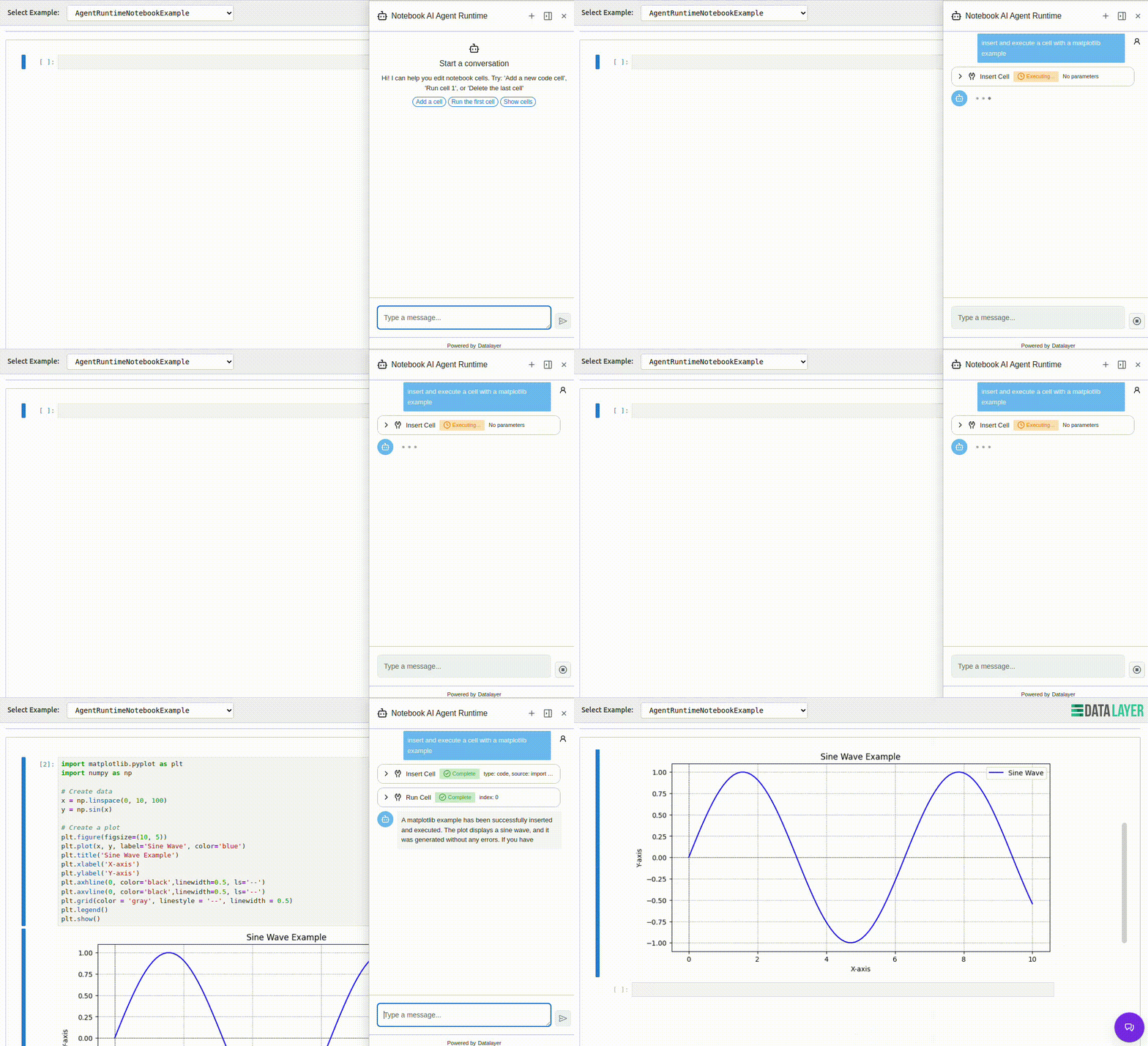
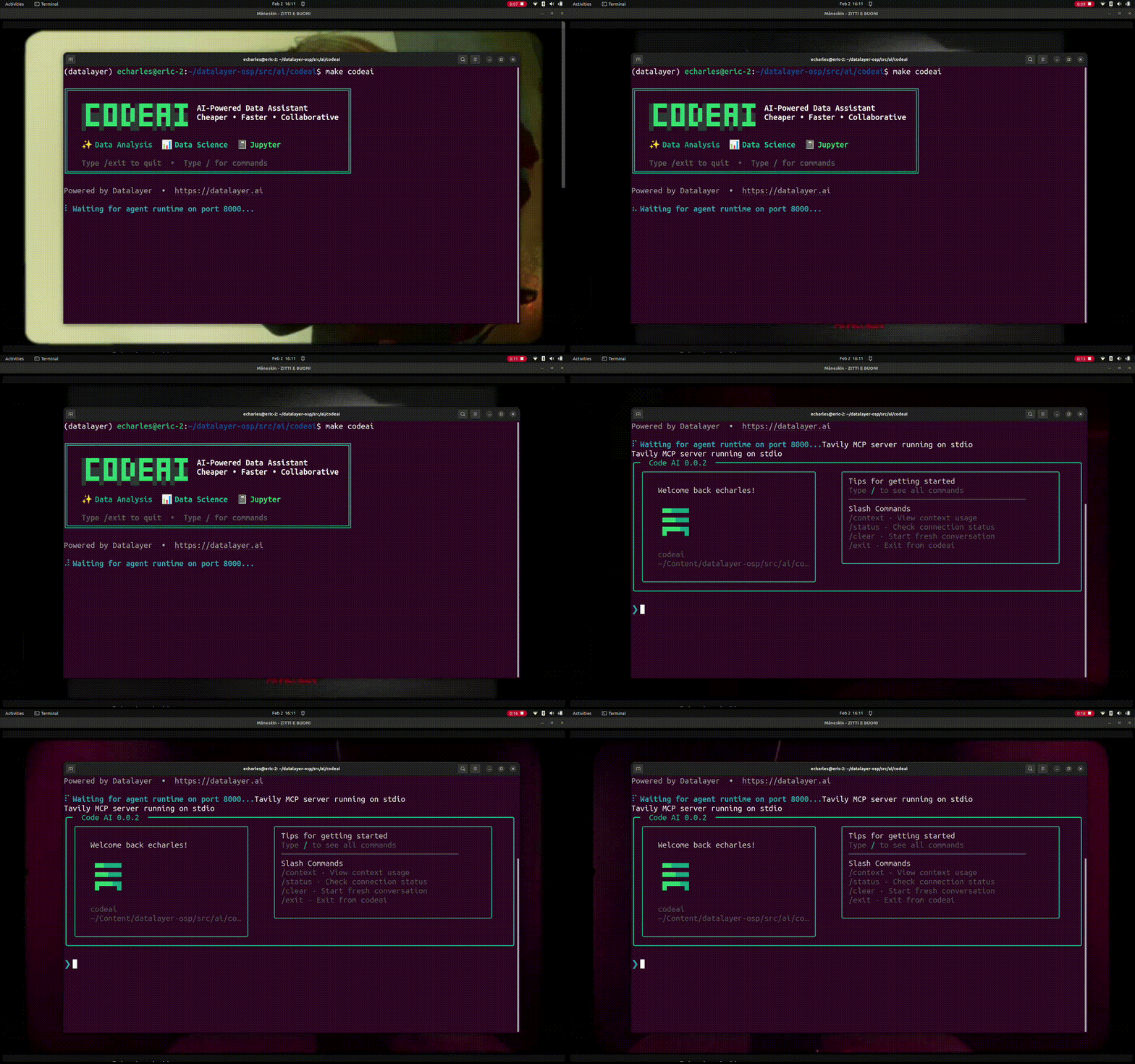
- ACP (Agent Client Protocol): WebSocket-based standard protocol
- Vercel AI SDK: Compatible with Vercel's AI SDK for React/Next.js
- AG-UI: Lightweight web interface (Pydantic AI native)
- MCP-UI: Interactive UI resources protocol with React/Web Components
- A2A: Agent-to-agent communication
- Pydantic AI: Type-safe agents (fully implemented)
- LangChain: Complex workflows (adapter ready)
- Jupyter AI: Notebook integration (adapter ready)
- 🔌 Flexible Architecture: Easy to add new agents and protocols
- 🛠️ Tool Support: MCP, custom tools, built-in utilities
- 📊 Observability: OpenTelemetry integration
- 💾 Persistence: DBOS support for durable execution
- 🔒 Context Optimization: LLM context management
The examples will demonstrate how to use the Agent Runtimes functionality in various scenarios and frameworks.
make examplesOn the main page, you’ll find an example gallery (cards) that break things down into practical building blocks:
• UX patterns (aka GenUI) with protocols like A2UI and AG-UI • Interactive or triggered workflows • Agent Identity and Controls with guardrails, monitoring, tool approvals • Programmatic tooling with Sandbox and Codemode for MCP and Skills • Outputs and Notifications • Real-time collaboration with users, subagents, and multi-agent teams • Custom agents built from Agentspecs • ...
Each of these concerns deserves more than a one-off solution—they need deep, composable, and pluggable implementations.
The detailed guides for architecture, use cases, interactive chat, key concepts, and runtime configuration are now in Docusaurus docs:
Generated catalogs are produced via:
make specsGeneration scripts are under scripts/codegen, and outputs are written to:
- Python: agent_runtimes/specs
- TypeScript: src/specs